In luxury real estate, buyers don’t win by acting fast — they win by acting smart.
This market isn’t just about square footage or finishes. In Palm Beach, the $1M+ range has a completely different set of rules, and high-net-worth buyers understand something most people don’t:
Smart buyers don’t chase listings — they track leverage.
Let’s break down what $1M+ buyers quietly do differently in Palm Beach — and how you can apply the same strategy when relocating or buying here.
What $1M+ Buyers Quietly Do Differently in Palm Beach
Most buyers start with comps.
Luxury buyers start with restrictions.
Because in Palm Beach, two homes that look similar on paper can have totally different future value based on:
1) They Know Comps Matter Less Than Rules
HOA rules & rental restrictions
Renovation approvals
Seasonal occupancy patterns
Short-term rental limits
Insurance realities (especially coastal)
Resale flexibility
The mindset difference:
Regular buyers ask: “Is this priced right?”
Luxury buyers ask: “Is this property easy to own, easy to rent, and easy to resell?”
A property can “comp” well today but become a resale headache later and luxury buyers avoid those traps before they even tour.
Most people follow the news.
Luxury buyers follow price movement.
The truth is: headlines lag behind the market. They’re noisy, emotional, and often wrong for Palm Beach micro-neighborhoods.
Luxury buyers track:
2) They Watch Price Reductions — Not Headlines
Price drops
Days on market
Re-list patterns
Listing history
Seller adjustments
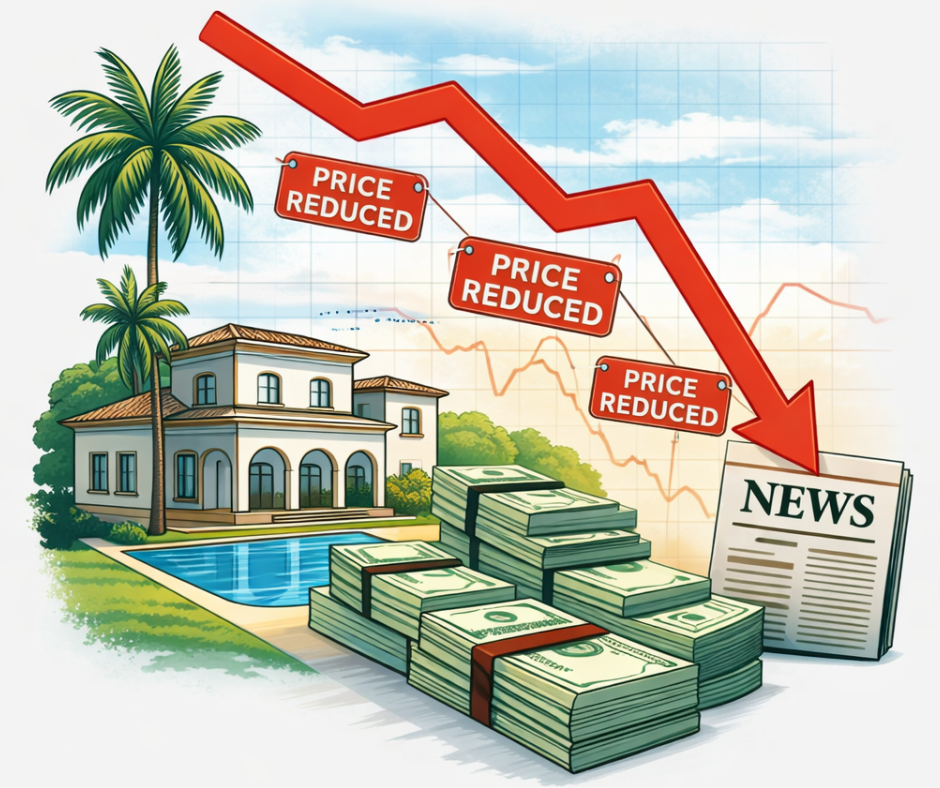
Because in a $1M+ market, the biggest advantage is identifying softness before others realize it.
Here’s where most deals are won.
Luxury buyers don’t negotiate like they’re trying to “win.”
They negotiate like they’re protecting a long-term asset.
They don’t overreact to:
3) They Negotiate With Patience
Bidding wars
Urgency tactics
“Other buyer interest”
Weekend hype
They know one rule that’s absolutely true in this price range:
Emotion is expensive in this market.
They’ll walk away quickly — and they’re comfortable waiting for the right opportunity.
That patience often leads to:
Stronger inspection leverage
Seller concessions
Better terms
Price improvements
Which neighborhoods attract relocation demand?
Where do buyers upgrade over time?
What communities hold value during slow markets?
What areas stay in demand even when rates shift?
Most buyers only look at what’s available today.
High-net-worth buyers focus on who wants to buy here next — because resale is the real profit.
They think long-term:
4) They Understand Long-Term Demand (Not Just Today’s Inventory)
In Palm Beach, long-term demand isn’t random — it follows lifestyle drivers like:
Walkability
Schools
Proximity to water
HOA flexibility
Airport access
Privacy + security

Luxury buyers buy where demand stays strong, not where a listing looks pretty.
✅ The Bottom Line
Luxury buyers don’t just shop for homes — they shop for leverage.
If you're relocating to Palm Beach or buying at the $1M+ level, don’t rely on a weekend visit or national market headlines.
The smartest move is understanding how this market really works, including the restrictions and leverage points most buyers never notice until it’s too late.
🎥 Watch the Full Episode
Want the full breakdown with real examples?
Download & Clickable Resources



Palm Beach Relocation FAQ
-
Not always. Buying immediately can be risky because you haven’t experienced daily life, HOA rules, or seasonal patterns yet. Many buyers benefit from renting first, learning the area, and then buying with clarity and leverage.
-
Because relocation buyers are making a decision without lived context. HOA restrictions, insurance costs, taxes, and resale dynamics can vary widely between communities, even when homes look similar.
-
Rent first if you’re unsure about the best community fit, want to understand seasonality, or need time to compare HOA rules and true monthly costs. Buy first if you’re highly confident in community fit and have already verified costs, restrictions, and exit strategy.
-
Focus on rental restrictions, special assessments, reserve funding, renovation approvals, and rules that affect resale demand. HOA structure can impact your flexibility and your ability to exit cleanly later.
-
Slow the timeline, verify HOA and cost details early, and prioritize long-term livability and resale over excitement. The best first purchase is the one that still works after the novelty wears off.
-
Many underestimate total monthly carrying costs—especially insurance, HOA obligations, assessments, and property tax structure. Two similar homes can have very different long-term costs.
-
Start with lifestyle priorities—privacy, activity level, maintenance tolerance, and governance preferences—then filter communities by HOA flexibility, long-term costs, and resale demand.
-
It’s strongly recommended. Relocation buyers face more unknowns, and a buyer’s agent helps identify community differences, verify HOA restrictions, evaluate true costs, and negotiate with long-term outcomes in mind.
Client
TESTIMONIAL
We would highly recommend Noel for any real estate transaction. We were buying from out of state and he went above and beyond to review properties for us in advance. After a prolonged search, we finally found our dream home only to have the inspection kill the deal for us. Noel handled the entire situation so well. From understanding our decision to walk away to delivering the message to all parties, he was nothing but professional. He was very supportive and two weeks later found us the home that was always meant to be ours. We cannot express how refreshing it is to work with such professional. If you have something to sell or are looking to buy, Noel is who you want to call. - Sheila E